
Can You Make a Candle in a Stemmed Glass? When Aesthetics Overlook Function
Published 2026-06-24
In this article:
• Is Elegance Always the Best Choice?
• The Hidden Challenge: The Geometry of the Glass
• Heat and the Intended Purpose of the Container
• Stability Matters More Than Aesthetics
• Can You Make a Candle in Stemmed Glassware?
• Final Thoughts – Celebrating Good Design
Is Elegance Always the Best Choice?
Some candle designs are so visually appealing that it's easy to forget a crucial question: were they ever meant to work that way?
Candles poured into stemmed drinking glasses have become a common sight, fitting beautifully into modern interiors and social media aesthetics. However, form should never outweigh function. A candle contains an open flame and generates heat for hours, meaning the choice of container is a matter of both performance and safety.
The Hidden Challenge: The Geometry of the Glass
Unlike standard candle jars, stemmed glasses usually feature a tapered bottom that narrows toward the stem. This geometry makes accurate wick placement significantly more challenging.
A properly made candle depends on a centered wick, securely fixed to its base. When the base isn't perfectly flat, accurate positioning becomes difficult. Even small deviations influence how the candle burns, how the melt pool develops, and how heat distributes throughout the vessel.
Heat and the Intended Purpose of the Container
Every candle gradually transfers heat into its container as it burns. This is true regardless of whether the vessel is made of glass, ceramic or metal. The difference is not the material itself, but what it was designed to withstand.
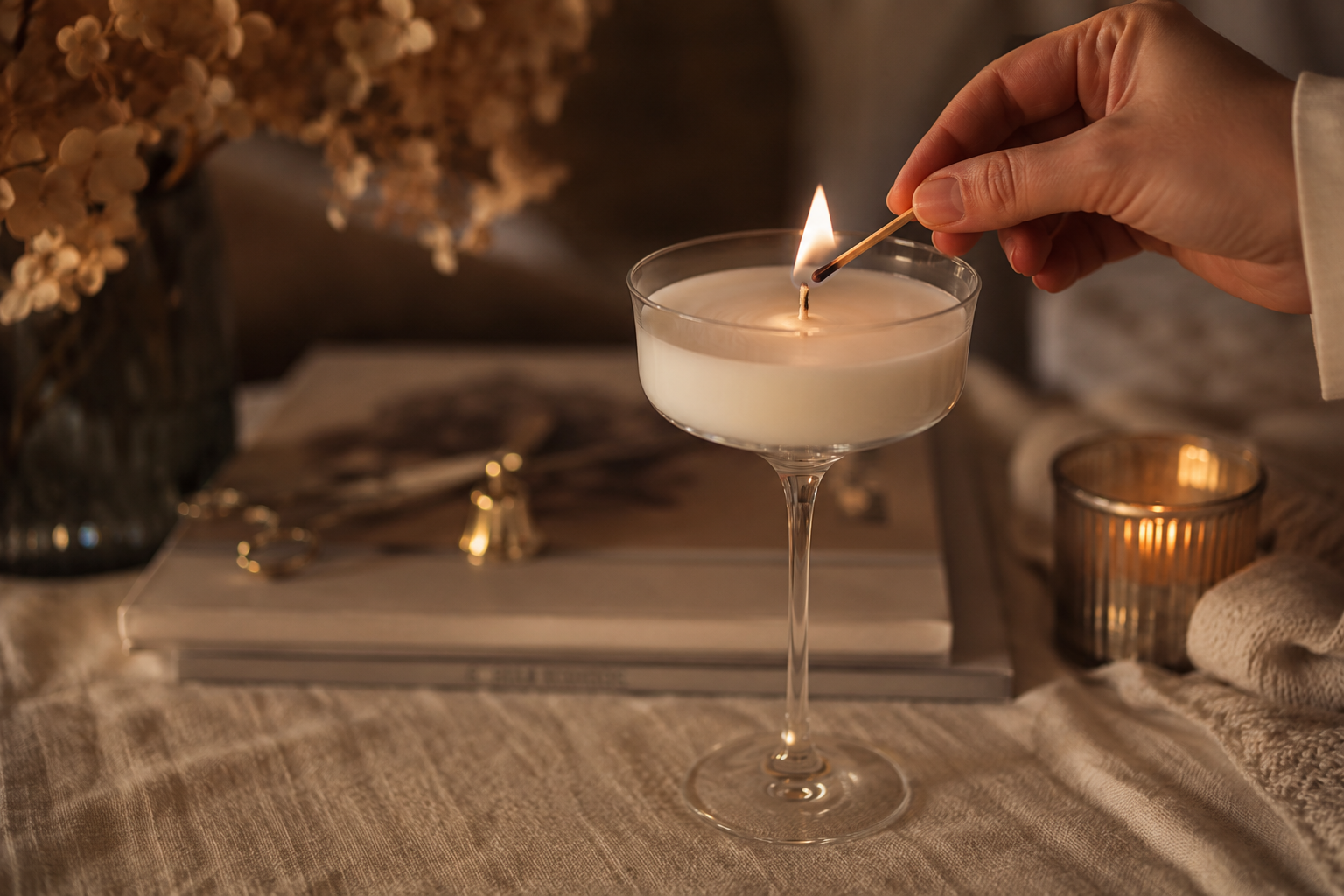
Containers manufactured specifically for candles are designed with continuous thermal exposure in mind. Their wall thickness, dimensions, and overall construction are intended to withstand repeated heating cycles.
Stemmed drinking glasses, by contrast, are designed for serving beverages. While many are durable, prolonged thermal stress isn't part of their intended use. The primary issue is the prolonged heat exposure that these vessels were never engineered to endure.
Stability Matters More Than Aesthetics
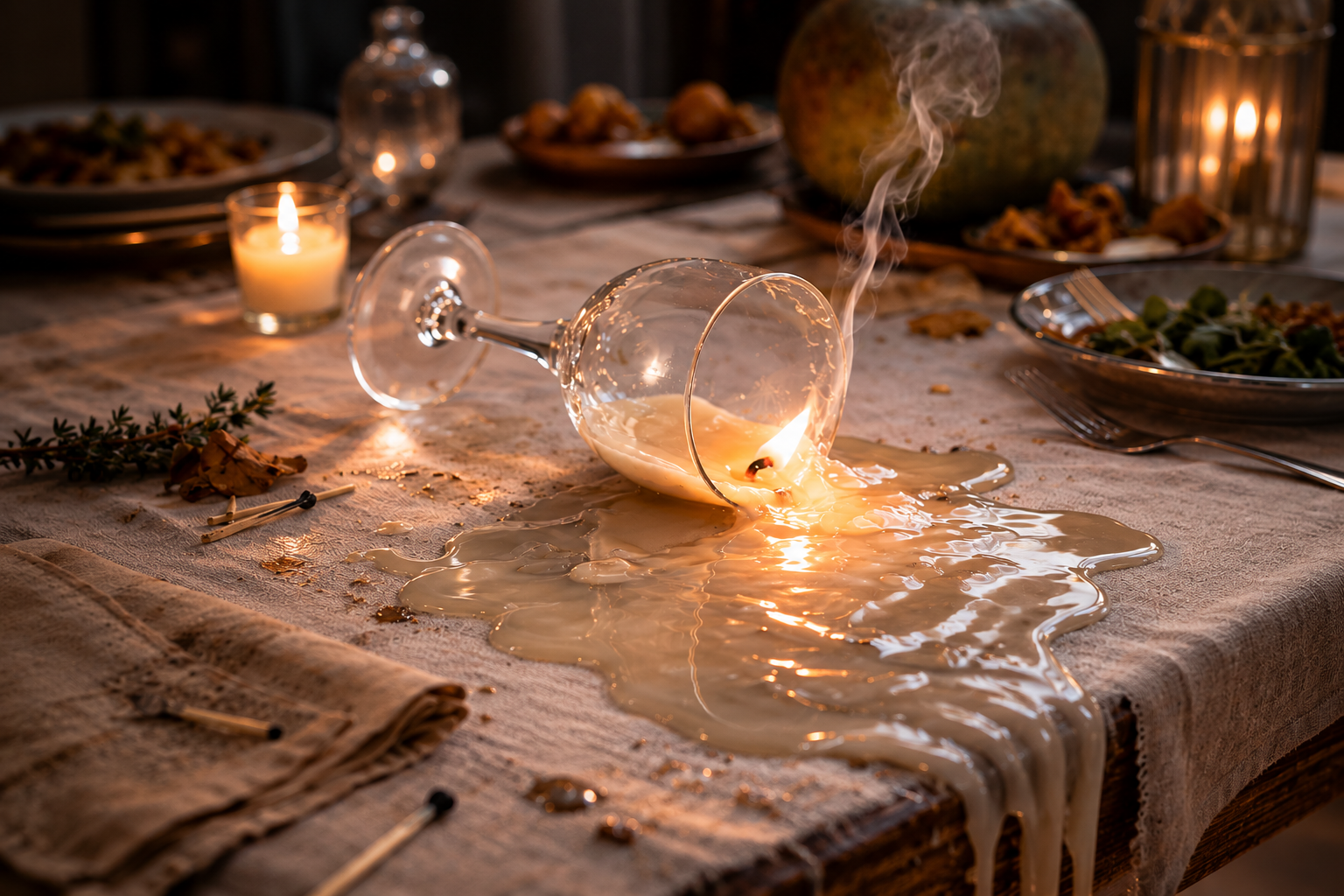
Stemmed glassware has a relatively high center of gravity and a small contact area with surfaces. While entirely appropriate for serving wine, this design poses risks for a burning candle where stability is paramount. Knocking over a beverage results in a manageable mess; tipping over a lit candle can potentially create a far more serious situation.
Can You Make a Candle in Stemmed Glassware?
The simple answer is yes - from a purely technical perspective, it is possible. The more important question is whether it is a suitable choice.
Considering the tapered geometry, the challenge of securing the wick, prolonged heat exposure, and reduced stability, there are much better alternatives available for making container candles. Sometimes the most elegant-looking option isn't the most appropriate one.
Final Thoughts – Celebrating Good Design
Stemmed glasses were designed for memorable moments. A quiet dinner, a wedding toast, and an anniversary celebration, or simply sharing a glass of champagne with someone special.

As candle makers, our responsibility extends beyond creating something beautiful; we must respect the intended purpose of our materials. Good design means choosing the right material for the right application, even when another choice may appear more elegant at first glance.
A stemmed glass remains beautiful because it fulfills the purpose it was designed for. The same principle applies to candle making. Great candle design isn't measured only by appearance, but by how it performs throughout its life cycle. After all, every interior deserves objects designed with purpose.